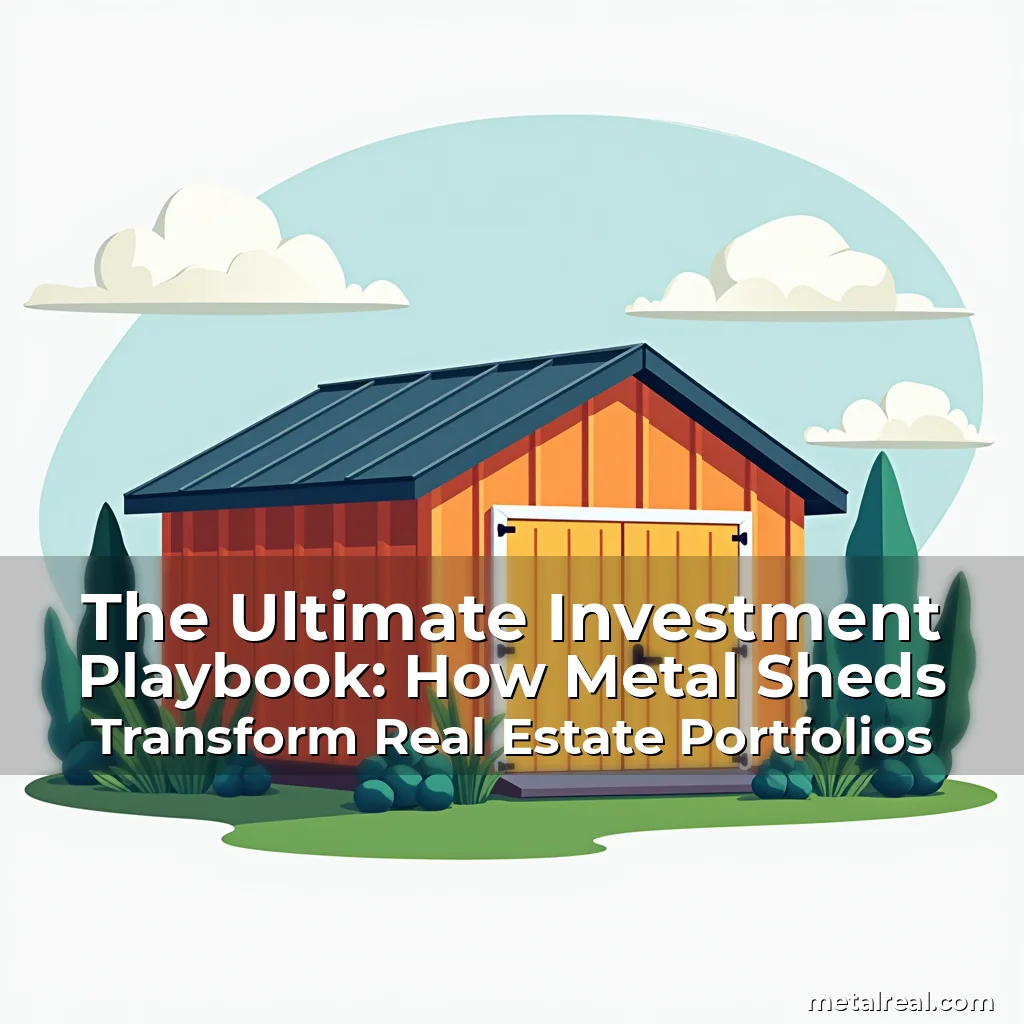
The Ultimate Investment Playbook: How Metal Sheds Transform Real Estate Portfolios
In the high-stakes world of real estate investment, savvy professionals are constantly seeking innovative ways to enhance property value while maintaining cost efficiency. One often overlooked yet increasingly popular strategy involves the strategic deployment of metal sheds across various property types. This article explores how these durable structures can become powerful assets in any investor’s toolkit.
From multifamily complexes to commercial lots, metal sheds offer solutions that traditional storage options simply cannot match. Their versatility makes them ideal for both residential and industrial applications, providing tangible returns through increased functionality and potential rental income streams.
Decoding the Value Proposition of Metal Sheds
Metal sheds represent a unique convergence of practicality and profitability within real estate investing circles. Unlike conventional wooden counterparts, they boast superior durability against weather extremes and pests, ensuring long-term structural integrity without frequent maintenance demands.
This inherent resilience translates directly into lower operational costs over time. Investors who incorporate metal sheds into their portfolios benefit from reduced repair expenses and extended service life, making them a financially prudent choice in today’s competitive market landscape.
- Durability: Steel construction resists rot, warping, and insect damage unlike wood alternatives
- Cost Efficiency: Lower lifetime maintenance requirements reduce overall ownership expenditures
Redefining Property Functionality Through Strategic Shed Placement
Smart placement of metal sheds can dramatically increase a property’s utility without requiring significant capital outlay. Whether serving as outdoor storage units or auxiliary workspaces, these structures add immediate functional value that appeals to diverse tenant needs.
For example, a single shed placed near a home’s rear entrance could accommodate tools, gardening equipment, or even serve as a temporary workshop space. In multi-family settings, shared storage areas significantly enhance resident satisfaction by addressing common pain points related to clutter management.
Optimizing Space Utilization in Urban Settings
Urban real estate professionals face unique challenges when maximizing limited square footage. Metal sheds provide ingenious solutions by converting underutilized spaces into productive zones without compromising zoning regulations.
A study conducted by the National Association of Realtors found that properties featuring well-integrated accessory structures saw up to 18% higher occupancy rates compared to similar listings lacking such features. This statistic underscores the importance of thoughtful spatial optimization strategies in densely populated markets.
Financial Advantages Across Different Investment Scenarios
Real estate investors encounter varying financial landscapes depending on property type and location. Metal sheds demonstrate remarkable adaptability across these scenarios, offering tailored benefits that align with specific investment objectives.
In residential markets, detached homes often see appreciable increases in perceived value when equipped with quality storage solutions. For commercial properties, strategically placed sheds can facilitate operations without encroaching on primary business functions.
Residential Applications: Enhancing Home Appeal
Homebuyers frequently prioritize functional living spaces that minimize daily inconveniences. Metal sheds address this need by transforming yards into organized environments where homeowners can store recreational gear, lawn equipment, or seasonal items safely.
Data from Zillow indicates that homes with additional storage solutions sell approximately 6% faster than comparable listings without such amenities. This accelerated sale process directly impacts turnover rates and overall portfolio performance metrics for real estate agents and landlords alike.
Commercial Opportunities: Unlocking Operational Efficiency
Business owners operating from retail locations or industrial sites require reliable storage solutions that withstand heavy usage. Metal sheds fulfill this requirement effectively while remaining discreet enough not to detract from storefront aesthetics.
A survey of small business operators revealed that those utilizing metal sheds reported 29% fewer inventory-related losses due to better organization and protection capabilities afforded by steel construction materials.
Design Considerations for Maximum ROI
Successful integration of metal sheds requires careful attention to design elements that ensure both aesthetic harmony and structural soundness. Choosing appropriate styles, sizes, and finishes plays a crucial role in achieving optimal return on investment.
Investors must consider local building codes and zoning restrictions before finalizing designs. Compliance with these regulations prevents costly legal issues down the line while ensuring the structure remains viable for its intended purpose.
Selecting Appropriate Dimensions and Configurations
Determining the right size and layout for each shed depends heavily on specific use cases and available site conditions. A simple 8×10 foot model might suffice for personal storage needs, whereas larger industrial-grade units may be required for commercial operations.
Customizable configurations allow for tailored solutions that meet exact specifications. Features like roll-up doors, overhead lighting systems, and climate control mechanisms can be incorporated based on projected usage patterns and environmental factors.
Material Quality and Construction Standards
The longevity of a metal shed is closely tied to the quality of materials used during fabrication. High-grade galvanized steel offers exceptional resistance against corrosion while maintaining structural strength even in harsh climates.
Reputable manufacturers employ advanced coating technologies that protect surfaces from UV degradation and rust formation. These protective measures contribute significantly to extending service life beyond typical expectations for standard construction methods.
Tax Implications and Legal Frameworks
Navigating tax considerations associated with accessory buildings requires understanding how different jurisdictions classify these structures. Proper classification determines eligibility for deductions, exemptions, and other financial incentives.
Consultation with qualified tax advisors ensures compliance with current regulations regarding depreciation schedules, insurance requirements, and property valuation assessments relevant to real estate transactions involving such structures.
Depreciation Schedules and Tax Deductions
Federal guidelines dictate specific depreciation periods for various types of structures attached to land. Accurate categorization enables investors to claim rightful deductions that impact net profit calculations.
Recent changes in tax legislation have introduced new opportunities for deductions related to energy-efficient modifications made to secondary structures. Staying informed about these updates allows for optimized financial planning strategies.
Zoning Regulations and Permits
Before proceeding with installation, thorough research into applicable zoning laws becomes imperative. Local municipalities often impose strict rules governing height limitations, setback distances, and permitted uses for non-residential structures.
Gaining necessary permits streamlines construction processes while avoiding penalties that could arise from unauthorized installations. Engaging experienced contractors familiar with regulatory frameworks proves invaluable in navigating bureaucratic hurdles efficiently.
Sustainable Practices in Metal Shed Development
Eco-conscious developers recognize the significance of sustainable practices in modern real estate ventures. Incorporating green initiatives into shed construction enhances environmental stewardship while appealing to environmentally aware tenants and buyers.
Utilizing recycled metals reduces demand for raw material extraction, supporting circular economy principles within the industry. Energy-efficient insulation options further decrease carbon footprint without sacrificing comfort levels inside enclosed spaces.
Energy-Efficient Design Elements
Modern metal sheds can be engineered with passive solar heating techniques that minimize reliance on artificial temperature controls. Strategically positioned windows and thermal mass materials help regulate internal temperatures naturally.
Installation of photovoltaic panels atop certain models transforms these structures into micro-power generation sources. This dual-purpose capability provides both storage function and renewable energy production capacity simultaneously.
Recycling and Reuse Potential
The modular nature of many metal sheds facilitates easy disassembly and relocation when property needs change. Components can often be repurposed at new sites rather than discarded entirely.
Manufacturers increasingly offer take-back programs allowing old structures to be returned for recycling instead of ending up in landfills. This closed-loop system supports sustainability goals while reducing waste accumulation concerns.
Market Trends and Future Outlook
Current market dynamics indicate growing acceptance of metal sheds among both residential and commercial sectors. As awareness spreads regarding their numerous advantages, adoption rates continue to climb steadily nationwide.
Predictive analytics suggest increasing demand will persist for several years, driven largely by rising appreciation for smart storage solutions amid evolving lifestyles and economic pressures facing contemporary consumers.
Technological Innovations Shaping Next Generation Models
Advancements in manufacturing technology enable creation of lighter yet stronger components using sophisticated alloys. These improvements result in easier transportation and quicker assembly times during installation phases.
Integration of IoT devices now allows remote monitoring capabilities through smartphone apps connected to sensors embedded within shed interiors. Such connectivity features provide real-time data tracking about security status and environmental conditions affecting stored contents.
Demographic Shifts Influencing Adoption Rates
Changing demographics create new opportunities for creative application of metal sheds across varied segments of society. Younger generations exhibit greater openness towards alternative housing arrangements incorporating flexible storage solutions.
As urban populations expand rapidly, pressure mounts to find efficient utilization of every available inch of land. Metal sheds emerge as clever responses to these spatial constraints through vertical stacking possibilities and compact form factors suitable for tight quarters.
Case Studies Demonstrating Practical Applications
Examining real-world examples helps illustrate concrete benefits derived from implementing metal sheds within different contexts. These case studies highlight successful implementations yielding measurable outcomes across multiple dimensions of success criteria.
One notable instance involved a suburban landlord who transformed vacant backyard spaces into profitable rental units by installing premium-quality storage facilities alongside existing residences.
Residential Case Study: Enhanced Yard Utilization
A California-based property owner integrated custom-designed metal sheds into her three-unit apartment complex. The addition created dedicated storage areas that enhanced tenant convenience while improving curb appeal through cohesive architectural styling choices.
Within six months post-installation, she observed a noticeable reduction in complaints about lack of secure storage options. Furthermore, property values appreciated slightly due to improved infrastructure offerings provided to occupants.
Commercial Case Study: Streamlined Business Operations
An Atlanta landscaping company retrofitted its warehouse compound with state-of-the-art metal sheds designated specifically for storing heavy machinery and seasonal supplies. The upgrade resulted in streamlined workflow efficiencies previously unattainable with outdated storage systems.
By centralizing all equipment within clearly marked zones inside reinforced steel enclosures, employees saved considerable time searching for misplaced tools. Productivity figures rose measurably following implementation of this organizational overhaul initiative.
Conclusion
Metal sheds present compelling opportunities for real estate professionals aiming to maximize asset value through intelligent enhancements. Their combination of durability, functionality, and flexibility positions them uniquely within the broader spectrum of property improvement strategies.
Investors willing to embrace these versatile structures stand poised to capitalize on emerging trends shaping tomorrow’s real estate landscape. By thoughtfully integrating metal sheds into development plans, stakeholders can unlock substantial returns while meeting ever-evolving consumer preferences effectively.